The global market for Alzheimer’s disease estimated to reach $38.5 billion by 2034, growing at a staggering double-digit CAGR of 17.5% over the forecast period, driven by rapidly ageing population, increasing prevalence of AD, coupled with approval of anti-amyloid mAbs and technological advancements in diagnostics and biomarkers.

Alzheimer’s disease (AD) is an irreversible, progressive neurodegenerative disease. It is the most common cause of dementia among the elderly, accounting for between 60% and 80% of cases in the US, Japan and five major EU markets (the UK, Germany, France, Italy, and Spain).
- According to Alzheimer’s Association, by 2050, an estimated number of people living with AD in the United States who are aged 65 or older number predicted to increase to approximately 14 million.
- According to the World Health Organization (WHO), an estimated 50 million people worldwide currently have dementia, and there are nearly 10 million new cases every year; Alzheimer disease affects about 60-70% of them.
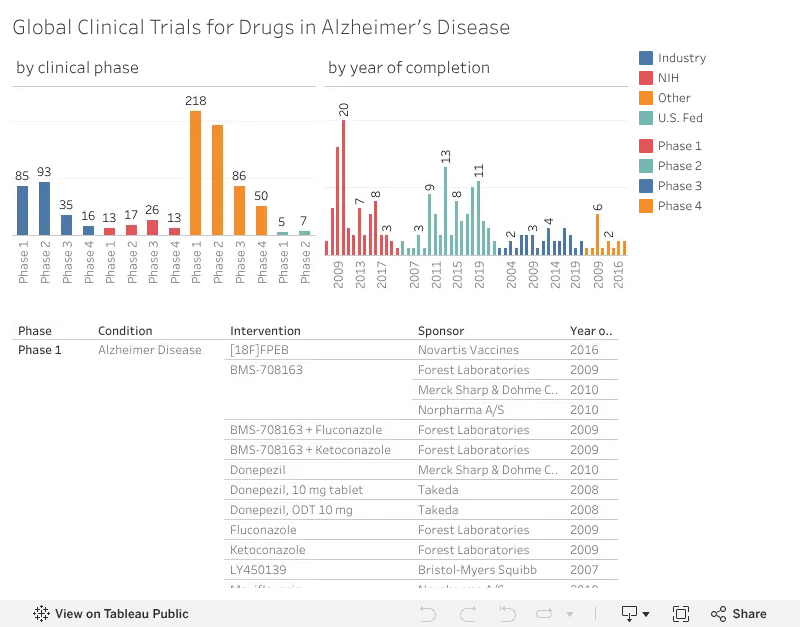
var divElement = document.getElementById(‘viz1733137492125’); var vizElement = divElement.getElementsByTagName(‘object’)[0]; vizElement.style.width=’800px’;vizElement.style.height=’600px’; var scriptElement = document.createElement(‘script’); scriptElement.src = ‘https://public.tableau.com/javascripts/api/viz_v1.js’; vizElement.parentNode.insertBefore(scriptElement, vizElement);
Alzheimer’s disease is the sixth-leading cause of death in the United States, and the fifth-leading cause of death among those age 65 and older. It also is a leading cause of disability and poor health. There are a large number of patients at the earliest stages of disease, before the onset of dementia, currently undiagnosed and untreated (prodromal disease).
As drug development shifts toward these prodromal patients, likely with premium-priced biological therapies, the market will expand considerably. There are no drug treatments that can cure Alzheimer’s disease or any other common type of dementia.
- There is a substantial opportunity for pharma companies to drive an increase in the wider Alzheimer’s market by improving diagnostic capabilities.
- The number of drug candidates in development for Alzheimer’s is at its highest-ever level.
- Despite the lack of success to date, biopharma companies continue to believe the potential rewards are worth the risk. As R&D in the field accelerates, therapies that treat not only symptoms of the disease but also slow its progression are expected to arrive much earlier.
The U.S. FDA has approved three types of medications – cholinesterase inhibitors (Aricept, Exelon, Razadyne), NMDA receptor antagonist, memantine (Namenda) to treat the cognitive symptoms (memory loss, confusion, and problems with thinking and reasoning) of Alzheimer’s disease; as well as the anti-amyloid agents with disease-modifying treatments (DMTs) – Aduhelm (aducanumab) and Donanemab.
- Majority of innovative products for Alzheimer’s currently in clinical trials are based on the amyloid hypothesis where it is believed a fault with the processing of amyloid precursor protein (APP) in the brain leads to the production of a short fragment of APP known as beta-amyloid.
- The current main focus of AD treatment is the inhibition of Aβ aggregation and the acceleration of Aβ clearance. Immunotherapies that target either Aβ or tau are being intensively investigated in phase III trials, and large-scale phase III trials of small-molecule BACE1 (β-secretase 1) inhibitors have also been initiated.
The global market for Alzheimer’s drugs report provides market size (revenue $million 2024 to 2034), market share, growth trends and forecast (CAGR%, 2026 to 2034).
The global Alzheimer’s disease market segmented by drug class (product/brand) – cholinesterase inhibitors / acetylcholinesterase (AChE) inhibitors [Aricept (donepezil hydrochloride), Exelon / Prometax (rivastigmine tartrate), Razadyne / Reminyl / Nivalin (galantamine)], N-methyl-daspartate (NMDA) receptor antagonists [Ebixa / Namenda/ Axura / Akatinol / Memary (memantine), Namzaric / Arimenda (donepezil + memantine)], anti-amyloid agents [Aduhelm (aducanumab), Leqembi (lecanemab), Kisunla (donanemab)]; pipeline analysis (phase III) – anti-amyloid agents [Keppra (levetiracetam)], anti-amyloid, anti-inflammatory agents [ALZT-OP1 (cromolyn sodium), GV-971 (sodium oligomannate)], neurotransmitters [Abilify (aripiprazole, BMS-337039), AVP-786, Rexulti (brexpiprazole, PC 34712), Lumateperone (ITI-007)], vitamin E supplements (alpha-tocopherol), others (protein kinase inhibitors) [Masivet / Kinavet (masitinib mesylate, AB1010)] and by geography.
- The broader Alzheimer’s pipeline (symptomatic and disease-modifying treatments) still has significant numbers of programs in various stages of preclinical and clinical development, although the percentages of amyloid-targeting therapies relative to the overall pipeline are lower in the earlier stages of development.
- Drug developers have given up on some mechanisms of action for clearing amyloid from the brains of Alzheimer’s patients altogether, such as small molecules targeting beta-amyloid precursor protein-cleaving enzyme (BACE) or BACE inhibitors.
- In 2021, the US FDA granted accelerated approval to Biogen’s Aduhelm (aducanumab) as the first disease-modifying therapy for the treatment of Alzheimer’s disease, despite a lack of evidence for its efficacy and concerns about adverse effects. Many researchers thought that aducanumab did not show a strong signal for cognitive decline.
- Aducanumab has not demonstrated benefit to patients, failed to meet regulatory guidelines, and is likely to cause both individual and societal harm. The US Centers for Medicare and Medicaid Services (CMS) has declined to cover aducanumab under federal insurance plans unless a person is enrolled in a clinical trial, leaving most patients to pay more than $28,000 for a year of treatment. Subsequently, the European Medical Agency (EMA) refused its approval.
- In 2023, the US FDA approved Biogen and Eisai’s Leqembi (lecanemab-irmb) for treatment of Alzheimer’s disease. Eli Lilly received BLA accelerated approval of Kisunla (donanemab) in 2024, which is likely to be compared with Aduhelm for better clearance of amyloid plaque.
- In 2021, the US FDA granted accelerated approval to Biogen’s Aduhelm (aducanumab) as the first disease-modifying therapy for the treatment of Alzheimer’s disease, despite a lack of evidence for its efficacy and concerns about adverse effects. Many researchers thought that aducanumab did not show a strong signal for cognitive decline.
- With 10,000 baby boomers turning 65 every day in the US, the market opportunity for AD and other neurodegenerative disorders represents a large and growing area. New approaches are emerging, with over 120 AD drugs in development, targeting multiple pathways.
- Drug developers have given up on some mechanisms of action for clearing amyloid from the brains of Alzheimer’s patients altogether, such as small molecules targeting beta-amyloid precursor protein-cleaving enzyme (BACE) or BACE inhibitors.
The global market for Alzheimer’s drugs research report is further divided by geography into North America (U.S., Canada), Europe (U.K., Germany, France, Italy, Spain, Rest of EU), Asia Pacific (Japan, China, India, Rest of APAC), Latin America (Brazil, Mexico, Rest of LA), and Rest of the World.
- In terms of geography, the North American region remains the dominant market for AD therapies, accounting for majority of the total sales, followed by Japan in market share.
- The market predicted to grow at a double-digit growth, making it one of the fastest-growing therapeutic areas in the industry. This growth is anticipated to be driven by the introduction of several new disease-modifying agents.
The global Alzheimer’s disease market report also provides the detailed market landscape (market drivers, restraints, and opportunities), market attractiveness analysis and profiles of major competitors in the global market including company overview, financial snapshot, key products, technologies and services offered, and recent developments.
Major competitors operating in the global market for Alzheimer’s drugs and profiled in this report include AbbVie, Inc., BioArctic AB, Biogen, Inc., Daiichi Sankyo Co., Ltd., Eisai Co., Ltd., Eli Lilly and Company, H. Lundbeck A/S, Novartis AG, Pfizer, Inc. (Warner-Lambert), and Takeda Pharmaceutical Co., Ltd.
Other companies with pipeline candidates include AB Science, Allergan plc (Forest Laboratories, Inc.), Avanir Pharmaceuticals, Inc., AZTherapies, Inc., Bristol-Myers Squibb Company, Chugai Pharmaceutical Co., Ltd., Concert Pharmaceuticals, Inc., Intra-Cellular Therapies, Inc., Johnson & Johnson (Janssen Pharmaceuticals, Inc./Ortho-McNeil Pharmaceutical, Inc), Merz Pharma GmbH & Co. KGaA, Neurimmune AG, Otsuka Pharmaceutical Co., Ltd., Roche Holding AG (F. Hoffmann-La Roche AG), Sanochemia Pharmazeutika AG, Shanghai Green Valley Pharmaceuticals Co., Ltd., Shionogi, Inc., TauRx Therapeutics, Ltd., and UCB S.A.
- Drug Class (Product/Brand)
- Cholinesterase inhibitors / Acetylcholinesterase (AChE) Inhibitors
- Aricept (donepezil hydrochloride)
- Exelon / Prometax / SDZ ENA 713 (rivastigmine)
- Razadyne / Reminyl / Nivalin (galantamine)
- N-Methyl-Daspartate (NMDA) Receptor Antagonist
- Ebixa / Namenda / Axura / Akatinol / Memary (memantine)
- Namzaric / Arimenda (donepezil + memantine)
- Anti-Amyloid Agents – Disease-Modifying Treatments (DMTs)
- Aduhelm (aducanumab)
- Leqembi (lecanemab)
- Kisunla (donanemab)
- Cholinesterase inhibitors / Acetylcholinesterase (AChE) Inhibitors
- Pipeline Analysis (Phase III)
- Anti-Amyloid Agents
- Keppra (levetiracetam)
- Anti-Amyloid, Anti-Inflammatory Agents
- ALZT-OP1 (cromolyn sodium)
- GV-971 (sodium oligomannate)
- Neurotransmitters
- Abilify (aripiprazole, BMS-337039)
- AVP-786
- Rexulti (brexpiprazole, PC 34712)
- Lumateperone (ITI-007)
- Vitamin E Supplement
- Alpha-Tocopherol
- Others (Protein Kinase Inhibitors)
- Masivet / Kinavet (masitinib mesylate, AB1010)
- Anti-Amyloid Agents
- Geography
- North America (U.S., Canada)
- Europe (U.K., Germany, France, Italy, Spain, Rest of EU)
- Asia Pacific (Japan, China, India, Rest of APAC)
- Latin America (Brazil, Mexico, Rest of LA)
- Rest of the World
- Company Profiles
- AbbVie, Inc.
- BioArctic AB
- Biogen, Inc.
- Daiichi Sankyo Co., Ltd.
- Eisai Co., Ltd.
- Eli Lilly and Company
- H. Lundbeck A/S
- Novartis AG
- Pfizer, Inc. (Warner-Lambert)
- Takeda Pharmaceutical Co., Ltd.
To request Table of Contents and Sample Pages of this report visit:
https://www.ihealthcareanalyst.com/report/alzheimers-disease-treatment-market/
Related publications: